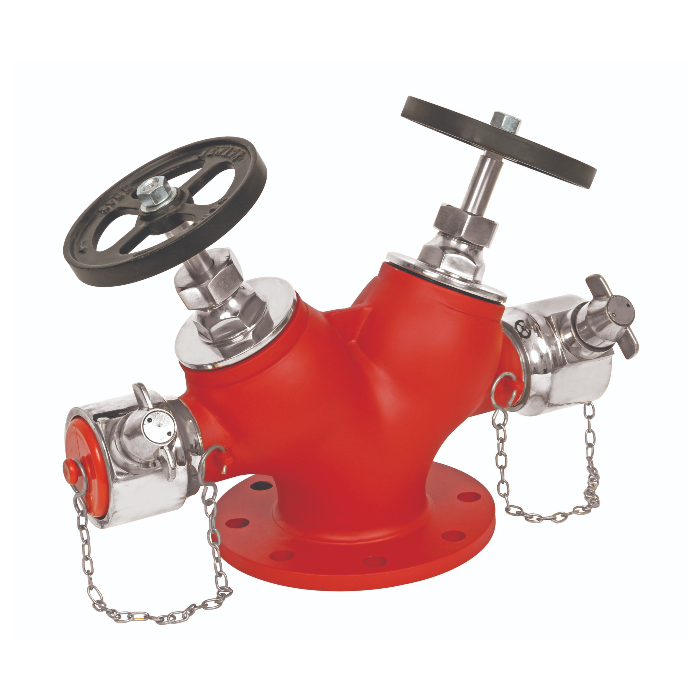
Fire safety infrastructure in modern buildings is no longer treated as an optional addition. It has become a vital part of responsible construction, industrial planning, and property management. Whether it is a residential tower, a commercial complex, a manufacturing unit, or a public building, the need for reliable fire protection systems is greater than ever. Among the many components that support emergency fire response, the four-way inlet breeching holds a very important place. It acts as a key connection point through which firefighters can supply water into a building’s internal fire protection line when extra pressure or additional water support is required during an emergency.
Vadodara has emerged as an important industrial and engineering hub, making it a suitable location for sourcing dependable firefighting equipment. With growing commercial and industrial development across the region, the demand for quality four-way inlet breeching systems has also increased. Buyers today want products that are durable, tested, easy to maintain, and aligned with the functional needs of modern fire safety systems. This is why selecting the right manufacturer becomes an important part of project planning and long-term building safety.
A fire protection system is only as effective as the components that support it during actual emergencies. The four-way inlet breeching is one of those components that often stays unnoticed until a fire incident or emergency drill highlights its importance. Installed as part of a building’s fire-fighting setup, it allows the fire brigade to pump water directly into the internal hydrant or sprinkler system from outside the building.
This function becomes especially important in situations where the building’s stored water, internal pumping arrangement, or pressure level is not sufficient to manage the fire effectively. The breeching inlet gives firefighters a reliable way to feed additional water into the system quickly. In large buildings, high-rise structures, industrial facilities, and complexes with extensive internal pipelines, this support can make a major difference in firefighting efficiency.
The reason it remains so relevant is simple. During an emergency, fire control efforts depend heavily on speed, access, water flow, and system coordination. A well-manufactured four-way inlet breeching helps create that coordination between the fire brigade’s external water source and the building’s internal fire network.
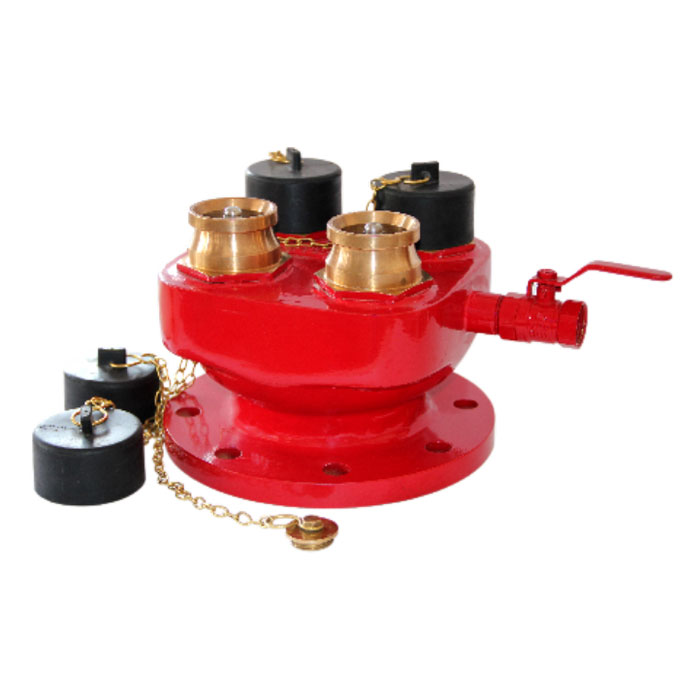
A four-way inlet breeching is designed to provide four separate inlet connections that can be used by fire brigade hoses or external pumping arrangements. These inlets connect to a common outlet that feeds water into the building’s fire line. In practical terms, it serves as an emergency charging point for the fire protection network.
When a fire breaks out in a multi-storey building, warehouse, mall, hospital, factory, or commercial tower, the internal hydrant or sprinkler system may require a stronger and more sustained water supply than what the building’s regular setup can provide at that moment. Through the four-way inlet breeching, firefighters can introduce water under pressure into the internal system and help maintain an effective firefighting flow.
The design usually includes inlet ports fitted with caps, valves that control reverse flow, and a strong body capable of handling demanding operating conditions. Since it is an emergency-use product, it must be manufactured with a focus on durability, compatibility, and pressure performance.
Four-way inlet breeching is commonly installed in buildings and facilities where fire safety systems need external support during emergencies. It is especially useful in larger structures where fire response planning includes the possibility of connecting fire brigade equipment directly to the building’s internal line.
In all these environments, the objective is the same: to ensure that firefighters have a dependable connection point to support the building’s internal fire system whenever needed.
When buyers search for a Four Way Inlet Breeching Manufacturer in Vadodara, they are not only comparing product prices. They are also evaluating the quality, reliability, and service capability behind the product. A breeching inlet is not an item that should be selected casually or based only on cost. It is a safety-critical product that needs to perform under demanding conditions, often after long periods of remaining unused.
A trusted manufacturer brings value in several ways. They use suitable raw materials, maintain dimensional accuracy, ensure proper valve fitting, and perform quality checks before dispatch. More importantly, they understand the practical application of the product in real fire safety systems. That experience helps them supply products that are not just technically correct on paper but also dependable in real installation and emergency conditions.
A manufacturer with industry experience is also more likely to assist with size selection, material guidance, and customisation needs. For contractors, builders, consultants, and institutional buyers, this technical support can be extremely useful during project execution.
Not every breeching inlet available in the market offers the same level of performance. The difference often lies in the manufacturing quality, materials used, and attention to engineering details. A good four-way inlet breeching is expected to deliver both durability and operational dependability.
These features may seem basic at first glance, but in a fire emergency, even a small design or material weakness can create major operational problems.
Material selection plays a major role in determining the life, strength, and reliability of a four-way inlet breeching. Since this equipment is generally installed outdoors or in semi-exposed utility areas, it must be able to withstand moisture, weather exposure, and long-term use without compromising its structural integrity.
The body of the breeching inlet is commonly manufactured using durable metals such as gunmetal or cast iron, depending on the design requirement and project preference. Gunmetal is often appreciated for its corrosion resistance and reliable performance in firefighting applications. Cast iron is valued for its structural strength and cost-effectiveness in many heavy-duty installations. Brass may also be used in selected fittings or internal valve components where required.
Protective surface coatings and finishing methods also matter. A good finish helps reduce environmental wear and improves the product’s ability to perform well over time. This is why serious buyers often discuss not just the product size and connection type, but also the material grade and finish before finalising the order.
At YG Sanitation, we have been serving the fire safety industry since 2009 with a strong commitment to quality, reliability, and customer satisfaction. As a trusted wholesaler and trader of fire safety products, we offer a wide range of dependable solutions including fire extinguisher accessories, water cum foam monitors, water mist mobile pump systems, and water mist guns. Our products are valued for their sturdy design, fine finish, easy usability, crack resistance, and lightweight construction. Backed by a skilled team, ethical business practices, competitive pricing, and timely delivery, we continuously strive to meet diverse customer requirements while maintaining the highest standards of service and product quality.
Before purchasing a four-way inlet breeching, buyers should understand the basic technical factors that affect installation and performance. Even a well-made product can create problems if its size, connection type, or pressure suitability does not match the building’s fire-fighting setup.
| Technical Factor | Why It Matters |
|---|---|
| Inlet Configuration | Ensures compatibility with fire brigade hose connections |
| Outlet Size | Must match the building’s internal fire line connection |
| Material Type | Affects durability, corrosion resistance, and service life |
| Valve Quality | Helps regulate flow and prevent reverse movement of water |
| Pressure Suitability | Important for emergency water charging conditions |
| Surface Finish | Improves weather resistance and long-term protection |
| Mounting Design | Affects installation convenience and positioning |
| Maintenance Access | Helps in periodic inspection and servicing |
A reliable manufacturer will guide the buyer on these factors and help ensure that the product is aligned with the intended system requirement rather than supplied as a generic fitting.
The value of this product becomes much clearer when looked at from an emergency response point of view. Firefighters arriving at a building fire need fast access to the building’s internal fire-fighting network. If the structure has a properly installed and accessible four-way inlet breeching, the fire brigade can connect hoses and start pumping water into the system without delay.
This helps in several ways. It supports internal risers and hydrants, improves water availability at upper floors or distant sections of the property, and reduces the time required to establish an effective firefighting line. In larger buildings where internal fire systems are extensive, this added support can be essential.
From a safety planning perspective, the breeching inlet acts as a bridge between external firefighting resources and the internal protection setup of the property. It does not replace the building’s fire system; rather, it strengthens it by providing an emergency backup route for water supply.
Vadodara has long been known for its industrial activity, engineering base, and manufacturing capabilities. For buyers looking for fire-fighting components, this matters because it creates access to manufacturers who understand industrial standards, metal fabrication, and quality-driven supply practices.
A Four-Way Inlet Breeching Manufacturer in Vadodara can often offer advantages such as quicker communication, better supply support for projects in Gujarat and nearby regions, and easier coordination for customised requirements. Local manufacturing presence can also help when buyers need repeat orders, faster dispatches, or technical discussions related to project execution.
As fire safety norms continue to gain importance in commercial and industrial construction, cities like Vadodara are becoming stronger supply centres for equipment that must combine durability with practical field performance.
Choosing the right manufacturer is not just about asking for a quotation and comparing prices. It is a decision that should involve some practical questions related to quality, suitability, and support.
These questions help buyers move beyond surface-level product comparisons and focus on long-term performance and project suitability.
In the market, some products may appear acceptable from a distance but reveal weaknesses once they are examined closely or put into service. Since fire-fighting equipment is a safety-critical category, buyers should be careful about warning signs that indicate poor manufacturing quality.
These issues may not only reduce the service life of the product but can also create risk during emergency use, which is exactly when reliability matters most.
Although a four-way inlet breeching is designed to remain ready for emergency use, it should never be treated as a fit-and-forget component. Regular inspection and maintenance are important to ensure that the unit remains functional, accessible, and free from damage or blockage.
Maintenance typically involves checking the inlet caps, valve condition, visible signs of corrosion, and the condition of the outlet connection. Any dirt, obstruction, or external damage should be addressed quickly. If the product is installed in a harsh outdoor environment, inspection should be more attentive to surface wear and moisture-related deterioration.
It is also important to ensure that the breeching inlet remains clearly accessible to the fire brigade. In some buildings, poor site planning or later modifications create obstructions around fire safety equipment, reducing emergency usability. Proper maintenance, therefore, includes both the condition of the equipment and the accessibility of the installation location.
Different categories of buyers may approach the same product with different priorities. A builder working on a commercial complex may focus on project timelines and quantity supply. A fire safety contractor may be more concerned with compatibility and ease of installation. An industrial buyer may prioritise durability, maintenance ease, and long-term reliability. A consultant may be focused on product suitability for a specified fire protection layout.
A capable manufacturer understands these varied expectations and responds with practical support rather than a one-size-fits-all sales approach. This is one of the biggest advantages of working with an experienced manufacturer instead of buying from a source that only treats the product as a general hardware item.
When these expectations are met, procurement becomes smoother, and the product becomes easier to trust within a larger fire safety system.
The process of choosing a manufacturer should always begin with quality and application suitability, not with the lowest price. A product like a four-way inlet breeching becomes important at the most critical moment of a fire emergency. That alone makes quality, durability, and performance non-negotiable.
A reliable manufacturer in Vadodara should be able to offer a strong product backed by sound manufacturing practices, practical knowledge, and a clear understanding of fire-fighting applications. Buyers should look for suppliers who can explain the product confidently, discuss materials and sizes transparently, and support project-specific requirements without confusion.
In a market where many products may look similar at first glance, the actual difference lies in engineering discipline, material quality, workmanship, and service reliability. For builders, industries, contractors, institutions, and project buyers, choosing the right Four Way Inlet Breeching Manufacturer in Vadodara is ultimately a decision that supports both compliance and real-world fire safety preparedness.
► A four-way inlet breeching is used to allow the fire brigade to pump water into a building’s internal fire-fighting system during an emergency. It acts as an external water entry point that supports hydrant or sprinkler lines when additional water pressure or supply is needed.
► It is commonly installed in high-rise buildings, commercial complexes, industrial plants, warehouses, hospitals, educational institutions, hotels, and other properties where fire-fighting systems may require external water support during emergencies.
► Material quality affects the product’s strength, corrosion resistance, pressure-handling ability, and service life. Since this equipment is part of a critical safety system, durable materials help ensure reliable performance when the product is needed most.
► A specialised manufacturer in Vadodara can offer better product understanding, dependable manufacturing quality, technical guidance, customisation support, and smoother coordination for project-based supply requirements.
► Yes, manufacturers may provide different sizes and configurations depending on the fire-fighting system requirement, building layout, and project specifications. It is always advisable to confirm compatibility before purchase.
► Yes, regular inspection and maintenance are important. The unit should be checked for corrosion, blockage, cap condition, valve performance, and overall accessibility to ensure it remains ready for emergency use.